


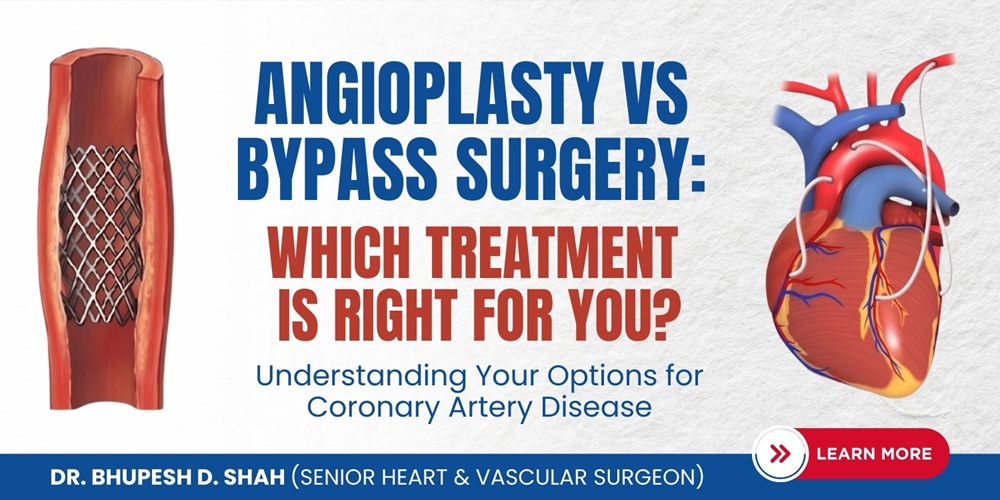
Heart disease remains one of the leading causes of death worldwide. When coronary arteries become blocked, doctors may recommend procedures to restore blood flow to the heart. Two commonly used treatments are angioplasty with stents (PCI) and coronary artery bypass graft surgery (CABG).
Both procedures are effective and widely practiced. The right choice depends on the severity of blockages, number of affected arteries, overall health, and long-term cardiovascular risk. Understanding the differences between these treatments can help patients participate actively in their care decisions.
Coronary artery disease occurs when fatty deposits, known as plaques, build up inside the arteries that supply blood to the heart. Over time, these plaques narrow the arteries and reduce blood flow. Common symptoms may include:
• Chest discomfort or pressure
• Shortness of breath during activity
• Fatigue
• Pain spreading to the arm, neck, or jaw
In some cases, blockages may remain silent until a heart attack occurs. When significant narrowing is detected, doctors may recommend procedures to restore blood circulation to the heart muscle.
Percutaneous Coronary Intervention (PCI), commonly known as angioplasty, is a minimally invasive procedure used to open narrowed arteries. During angioplasty:
The procedure usually requires a short hospital stay, and recovery time is relatively quick.
Angioplasty is often recommended for:
• Single artery blockages
• Less complex coronary disease
• Certain emergency situations such as heart attacks
Coronary Artery Bypass Grafting (CABG) is a surgical procedure that creates a new pathway for blood flow around blocked arteries. During bypass surgery:
This approach can restore blood supply to multiple areas of the heart at the same time.
Bypass surgery is commonly considered for:
| Feature | Angioplasty (PCI) | Bypass Surgery (CABG) |
|---|---|---|
| Procedure Type | Minimally invasive catheter procedure | Open or minimally invasive surgery |
| Recovery Time | Usually shorter initial recovery | Longer recovery but may address multiple blockages |
| Hospital Stay | Typically 1–2 days | Usually several days |
| Treatment Scope | Often treats one blockage at a time | Can treat multiple arteries during one operation |
| Durability | Effective for many cases, though repeat procedures may occur | Arterial grafts can remain open for many years |
Large international clinical trials have examined long-term outcomes for both procedures.
Studies such as the SYNTAX and FREEDOM trials suggest that patients with complex multivessel coronary artery disease or diabetes may experience better long-term outcomes with bypass surgery compared with multiple stents. However, many patients with simpler disease patterns benefit significantly from angioplasty.
This is why individualized evaluation is essential.
Modern cardiac care often involves a Heart Team, which includes cardiologists, cardiac surgeons, and other specialists. Together they evaluate:
• Coronary angiography results
• Severity and distribution of blockages
• Heart function
• Age and overall health
• Patient preferences
This collaborative approach helps determine the treatment strategy most appropriate for each patient.
When facing treatment for coronary artery disease, patients should feel comfortable discussing questions such as:
• How many arteries are affected?
• What are the long-term expectations for each treatment?
• What are the recovery timelines?
• What lifestyle changes will be required after treatment?
Clear communication between the patient and healthcare team plays a key role in achieving the best outcomes.
Angioplasty and bypass surgery are both important tools in modern cardiology. Each has specific advantages depending on the patient’s condition.
The most important step is timely evaluation and informed decision-making guided by experienced medical professionals.
Understanding your treatment options allows you to participate actively in your heart care and make decisions that support long-term health.
Dr. Bhupesh D. Shah is a Cardiothoracic and Vascular Surgeon associated with Sterling Hospitals, Ahmedabad. His work focuses on advanced surgical treatment of heart and vascular conditions.