


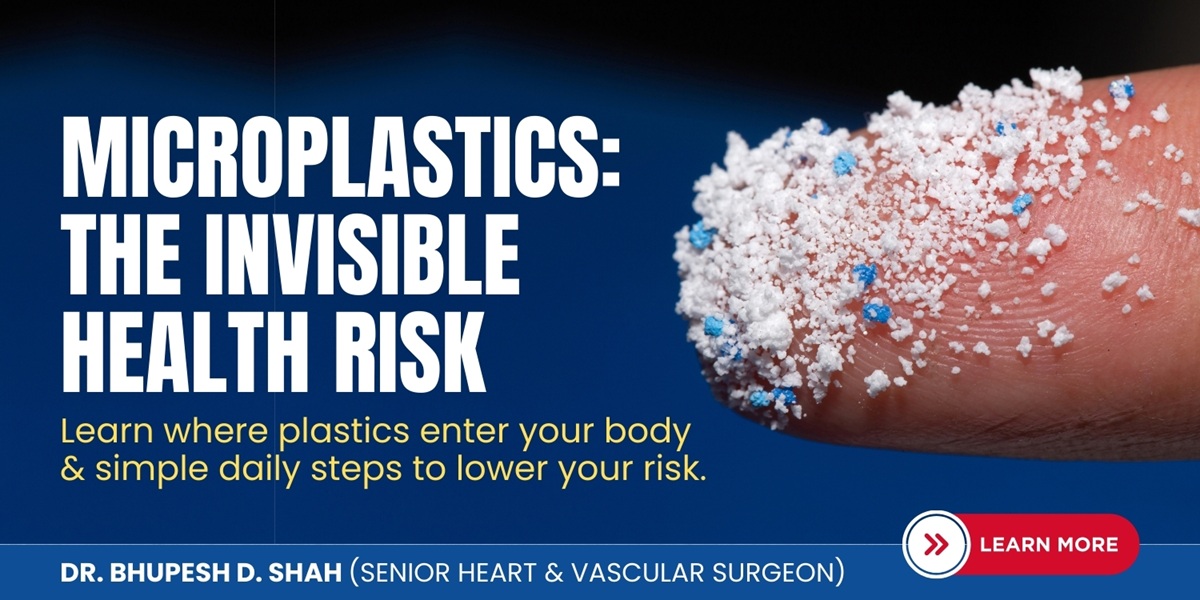
Plastic pollution is no longer only an environmental issue. It is now a biological concern.
Recent scientific evidence confirms that microplastics and nanoplastics are being detected inside the human body. They have been found in blood, lungs, liver, arterial plaques, brain tissue, and even the placenta. What was once considered external contamination is now an internal exposure.
This is not about alarm. It is about informed awareness.
Current estimates suggest that the average person may ingest and inhale up to 5 grams of plastic per week. That is approximately the weight of a credit card.
Microplastics are particles between 1 micrometer and 5 millimeters. Nanoplastics are smaller than 1 micrometer and are far more concerning because of their ability to cross biological barriers such as the blood brain barrier and the placenta.
Unlike many toxins, plastics are not metabolized by the human body. Humans do not produce enzymes capable of breaking down synthetic polymers. Clearance is limited. This creates what researchers describe as a retention gap, where daily intake exceeds elimination.
Microplastics often remain lodged in the gut or lungs.
Nanoplastics are more mobile and can:
Cross cell membranes
Enter the bloodstream
Cross the blood brain barrier
Reach placental tissue
Plastics are not chemically inert. They behave like chemical carriers.
They contain additives such as phthalates, PFAS, flame retardants, and stabilizers. They also absorb environmental pollutants including heavy metals and pesticides. Once inside the body, these substances may detach and enter tissues, contributing to inflammation and endocrine disruption.
Some exposure sources are obvious. Others are routine and overlooked.
Major contributors include:
Bottled water
Synthetic textiles such as polyester and fleece
Tire wear particles in road dust
Indoor air containing microfibers
Less obvious sources include:
Table salt
Plastic lined tea bags
Paper cups with plastic coatings
Heating food in plastic containers
Even daily habits influence total exposure load.
There are two primary entry routes.
Food, drinking water, and swallowed dust introduce particles into the gastrointestinal tract. Some particles pass through intestinal cells and enter circulation.
Airborne microfibers and dust particles are inhaled. Larger particles may be cleared, but smaller nanoplastics can reach the alveoli and potentially cross into the bloodstream.
Recent clinical and experimental data identify several potential retention sites.
Nanoplastics have been detected in human brain tissue. Early studies suggest possible associations with neuroinflammation and protein aggregation.
Microplastics have been found in atherosclerotic plaques. Observational research reports a correlation between plastic containing plaques and increased cardiovascular risk.
The liver filters blood coming from the digestive tract. It captures circulating particles and may develop chronic low grade inflammation in response.
Several studies have identified microplastics in placental tissue. This raises concern about fetal exposure during critical developmental stages.
The human body lacks enzymatic pathways to degrade synthetic polymers.
Clearance mechanisms include:
Biliary excretion through the liver and feces
Renal filtration for very small particles
Mechanical elimination
Macrophages can engulf plastic particles but cannot digest them. Over time, this may promote chronic inflammation and tissue remodeling.
If intake consistently exceeds clearance, accumulation becomes more likely.
Research is ongoing, but emerging evidence links chronic exposure to:
Cardiovascular inflammation and plaque instability
Neuroinflammatory changes
Liver metabolic dysfunction
Reproductive and endocrine disruption
Chronic airway irritation
Direct cause and effect relationships continue to be studied. However, the exposure signal is strong enough to support preventive action.
Complete elimination is unrealistic. Meaningful reduction is achievable.
Use filtered tap water
Avoid storing water in hot plastic bottles
Reduce dependence on bottled water
Store and reheat food in glass or stainless steel
Avoid plastic tea bags
Limit hot food contact with plastic containers
Use HEPA air filtration
Wet mop instead of dry dusting
Improve ventilation
Prefer natural fibers when practical
Wash synthetic clothing in full loads
Consider microfiber capturing laundry filters
Maintain adequate dietary fiber intake
Follow an anti inflammatory diet rich in fruits and vegetables
Maintain metabolic health
Pregnant women, infants, and young children are more vulnerable. Filtered water, minimizing plastic heating, and reducing indoor microfiber exposure are especially important during pregnancy and early life.
Microplastics represent a chronic environmental exposure that has entered human biology.
They are not an acute poison.
They are not rapidly cleared.
They are modifiable.
Small daily changes in water, air, food storage, and material use can meaningfully reduce exposure over time.
The goal is not fear.
The goal is awareness and reduction.
Dr. Bhupesh D. Shah is a highly experienced Senior Cardiothoracic and Vascular Surgeon with more than 16,000 successful surgeries to his credit. Over the past decades, he has helped thousands of patients with complex heart and vascular problems, earning their trust through both his surgical skill and his compassionate care. He is available full-time at Sterling Hospital, where patients benefit not only from his vast experience but also from his commitment to bringing the latest advancements in cardiac science into everyday practice. For many families, Dr. Shah is not just a surgeon but a guide and partner in their journey to better heart health.