

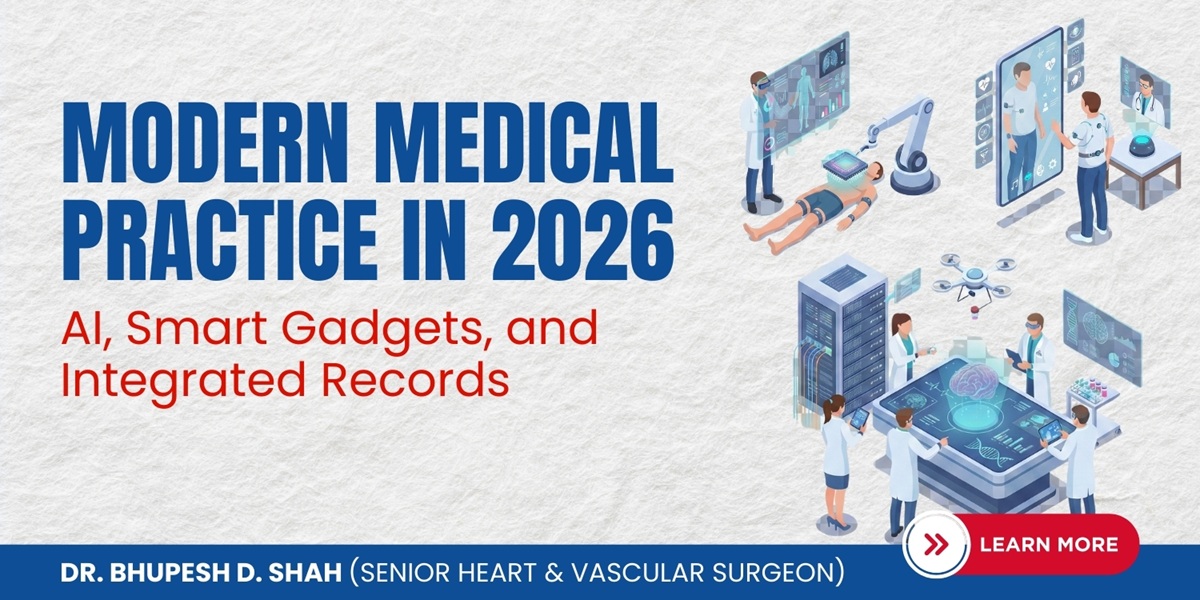
Medicine is changing faster than at any time in history. The traditional clinic model, built around manual examinations, handwritten notes, and fragmented reports, is no longer sufficient for the complexity of modern healthcare.
By 2026, medical practice is shifting toward a connected ecosystem where AI-powered devices, smart diagnostics, and integrated digital records work together to support faster decisions, earlier detection, and better patient outcomes.
This transformation is not about replacing doctors. It is about enhancing clinical judgment with technology that brings hospital-grade capability directly into daily practice.
The physical examination is evolving. While clinical skills remain foundational, new tools are extending what doctors can hear, see, and interpret in real time.
Modern digital stethoscopes now amplify heart and lung sounds up to 40 times while filtering background noise. Many models combine auscultation with built-in ECG recording and AI-based screening for murmurs and atrial fibrillation within seconds.
This allows physicians to identify abnormalities during a routine consultation, long before symptoms become obvious.
Pocket-sized ultrasound probes have transformed smartphones into portable imaging systems. With AI-assisted anatomy recognition and auto-labeling, bedside imaging is no longer limited to radiology departments.
For clinicians, this means faster answers, reduced referrals, and more confident decision-making at the point of care.
Smart medical glasses are emerging as one of the most powerful tools in modern practice.
These devices use transparent displays that project patient data, vitals, imaging, or lab results directly into the physician’s field of vision. Voice commands allow doctors to access information without touching screens, particularly valuable in sterile environments.
Beyond convenience, their clinical impact is significant:
Surgeons can overlay 3D CT or MRI images during procedures for improved precision
Junior doctors in remote settings can receive live guidance from senior specialists
Teaching hospitals can provide students with real-time first-person procedural learning
When paired with AI scribes, these glasses also enable automatic documentation, drastically reducing charting time and physician burnout.
Artificial intelligence is increasingly embedded into routine medical tasks.
These systems listen to doctor-patient conversations and automatically generate structured clinical notes that integrate directly into the electronic health record. Documentation that once took hours can now be completed in minutes, allowing doctors to focus on patients rather than screens.
Applications like MDCalc, Epocrates, and VisualDx assist with real-time risk scoring, drug interaction checks, and diagnostic confirmation. These tools support safer prescribing and faster clinical reasoning, especially in complex cases.
Healthcare is shifting from episodic visits to continuous insight.
Modern wearables now provide clinical-grade data, not just fitness metrics.
Smart rings track heart rhythm, sleep patterns, and respiratory rate around the clock. Continuous glucose monitors reveal real-time metabolic responses. Smart inhalers monitor usage patterns and environmental triggers. Bio-adhesive patches continuously record vital signs in post-operative or high-risk patients.
These devices allow early identification of deterioration, often before the patient feels unwell.
Cardiac diagnostics have seen one of the most dramatic evolutions.
Portable 12-lead ECG devices now provide hospital-level recordings even in outpatient or home settings. Long-term ECG patches can monitor rhythm continuously for weeks, with AI algorithms instantly flagging dangerous arrhythmias.
Even smartwatches have become valuable screening tools, capable of detecting irregular rhythms and prompting formal evaluation.
Together, these technologies are transforming how arrhythmias are detected, monitored, and managed.
The next phase of healthcare focuses on comfort and continuity.
Smart textiles woven with conductive threads can record ECG and respiratory data. Vital belts and adhesive dots provide non-invasive monitoring without wires or bulky equipment. AI-enabled hearing devices now double as physiological sensors.
For patients, healthcare becomes less intrusive. For doctors, data becomes richer and more reliable.
AI-driven systems are revolutionizing diabetes management.
Closed-loop insulin delivery systems function as artificial pancreases, continuously adjusting insulin doses based on real-time glucose data. Retinal cameras with embedded AI detect early diabetic eye disease without specialist interpretation.
Thermal foot scanners, wound-monitoring devices, and digital neuropathy tools allow earlier intervention and more objective follow-up, significantly reducing complications.
Modern automated external defibrillators now include AI-guided voice instructions and improved rhythm analysis, increasing survival during cardiac arrest.
Portable cardiac marker analyzers can rapidly measure troponin and other enzymes at the point of care, enabling faster diagnosis and timely referral during acute coronary events.
Radiology is no longer limited to diagnosis. It is becoming central to prevention.
Low-dose CT scans with AI-driven coronary calcium scoring help predict future cardiac events. AI-enhanced cardiac MRI allows early detection of cardiomyopathies and inflammation. Carotid ultrasound with automated measurements identifies early atherosclerosis.
In neurology, AI-assisted brain MRI enables early detection of neurodegenerative changes long before clinical symptoms appear.
Wearable devices now objectively measure tremors, gait changes, balance instability, and sleep-related brain activity. Eye-tracking and digital cognitive platforms detect early cognitive decline with precision.
These tools are reshaping how conditions such as Parkinson’s disease, dementia, and epilepsy are monitored over time.
Technology is only powerful when data is organized.
AI scribes, remote monitoring platforms, and patient-generated reports now feed into unified dashboards that highlight only actionable alerts. Doctors receive meaningful insights rather than data overload.
Secure authentication, encrypted systems, and regulatory compliance ensure patient data remains protected.
The modern clinic integrates:
Centralized patient dashboards
Remote patient monitoring systems
Digital therapeutics prescribed alongside medication
Automated documentation and follow-up tracking
This ecosystem allows proactive care rather than reactive treatment.
Doctors also play a critical role in guiding patients.
Recommending validated devices, helping elderly patients set up apps, and explaining the difference between consumer wellness data and medical-grade clinical data ensures technology is used meaningfully, not blindly.
The medical practice of 2026 is not defined by machines, but by intelligent integration.
AI, smart gadgets, advanced imaging, and unified records allow doctors to detect disease earlier, work more efficiently, and deliver safer, more personalized care.
Technology does not replace the physician’s judgment.
It strengthens it.
The future of medicine is not coming.
It is already here.