


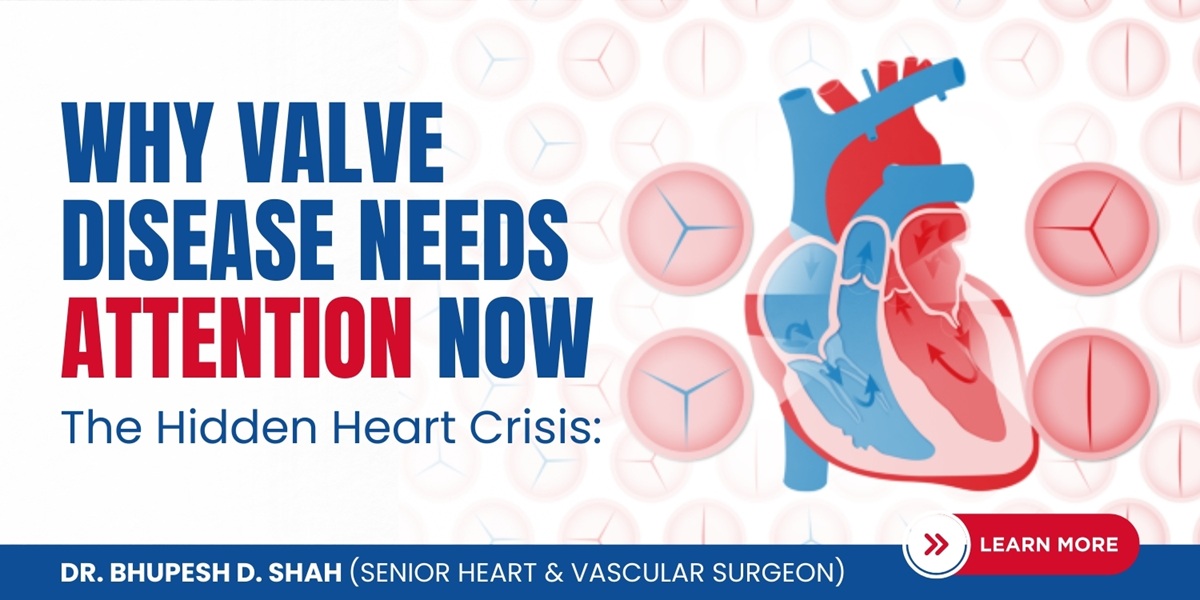
Heart disease is often associated with heart attacks. But there is another growing heart condition that is quietly affecting millions, especially older adults. It is called Heart Valve Disease (HVD). This condition develops slowly, often without clear warning signs, and is frequently mistaken for “normal aging.” Yet, when detected early, heart valve disease is highly treatable. As we move toward 2050, awareness is no longer optional. It is essential.
The global population is living longer than ever before. By 2050, the number of people above the age of 65 is expected to reach 1.5 billion. With this shift comes a sharp rise in age-related conditions, and heart valve disease is one of the most significant among them.
In developed countries, the number of patients with clinically significant valve disease is projected to double by 2050. Among people older than 75 years, nearly 1 in 8 is likely to have a valve-related heart problem.
This is not a future problem. It is already happening around us.
The heart has four valves that act like doors, allowing blood to flow in one direction. When these valves stop working properly, the heart begins to struggle.
There are two main types of valve problems:
Over time, both conditions can weaken the heart muscle and lead to heart failure if left untreated.
This is where valve disease becomes truly dangerous.
Symptoms such as breathlessness, tiredness, dizziness, or swollen ankles are often brushed off as part of aging. Many people believe they are simply slowing down.
The truth is different.
Once symptoms appear, especially in severe valve disease, the risk rises sharply. For example, untreated severe aortic stenosis carries a mortality rate of nearly 50 percent within two years of symptom onset.
Delaying evaluation can mean missing the window when treatment is safest and most effective.
Despite all modern technology, the most powerful tool for early detection is still simple and inexpensive: the stethoscope.
A faulty valve often creates a heart murmur, a sound that can be heard years before symptoms begin. Yet studies show that many older adults do not receive focused heart auscultation during routine check-ups.
This gap in awareness, not technology, is costing lives.
Heart valve disease looks different across the world.
In high-income countries, it is mainly degenerative, caused by wear and tear of aging valves.
In low- and middle-income countries, rheumatic heart disease remains a major cause. This form starts with untreated throat infections in childhood and leads to severe valve damage at a young age. Even by 2050, many developing regions will still be battling a disease that is largely preventable.
There is good news.
Treating valve disease no longer always requires open-heart surgery. Procedures like Transcatheter Aortic Valve Implantation (TAVI or TAVR) allow doctors to replace a diseased valve through a small tube inserted via the leg artery.
Recovery is faster, hospital stays are shorter, and even patients in their 80s or 90s can safely undergo treatment. What was once considered too risky is now routine in many centers.
Awareness saves lives, but action saves hearts.
If you or a loved one is over 60, ask your doctor a simple question:
“Can you listen to my heart specifically for a murmur?”
Your risk is higher if you:
A simple test is everyday function. If activities that were easy last year now leave you breathless, dizzy, or fatigued, do not ignore it. Seek medical advice early.
Heart valve disease is not a failure of lifestyle. It is a mechanical problem, and today, it has a mechanical solution.
We have the tools.
We have the treatments.
What we need now is awareness.